Doomsday for Sale: Inside the Booming Business of Survival Content
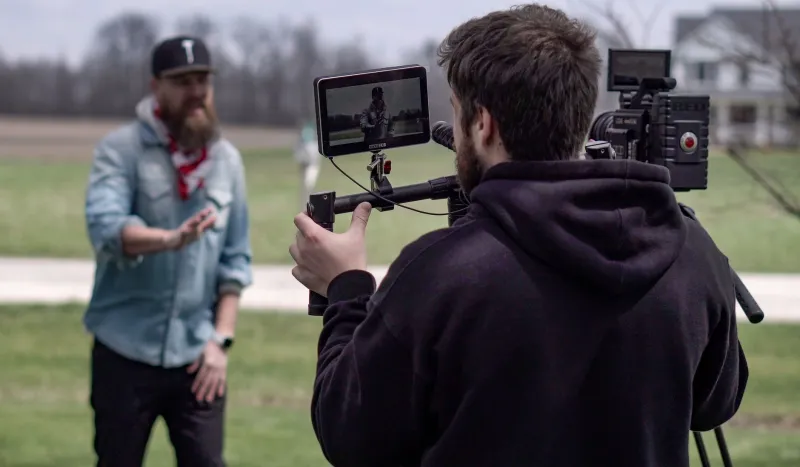
Somewhere in rural Tennessee, a man in a Carhartt jacket is explaining, with the measured calm of a financial advisor, how to filter creek water through a improvised charcoal system. His production values are immaculate. His subscriber count sits north of two million. His latest video — a forty-minute tour of a hardened underground shelter equipped with a year's worth of freeze-dried provisions, medical supplies, and a diesel generator — has accumulated four million views in eleven days.
He is not a survivalist in the traditional sense of the word. He is a content creator. And he is very, very good at his job.
The survival influencer economy is no longer a fringe phenomenon operating at the margins of online culture. It is a mature, well-capitalized industry segment with identifiable stars, established monetization pathways, dedicated brand partners, and an audience that spans demographics in ways that consistently surprise outside observers. To examine it seriously is to encounter a set of questions that resist easy answers: Is this content genuinely educational? Is it entertainment dressed as instruction? And what does its extraordinary commercial success reveal about the psychological state of the American public in the third decade of the twenty-first century?
The Landscape
The genre is broader than any single platform or format. On YouTube, long-form channels dedicated to bushcraft, emergency preparedness, and off-grid living have accumulated subscriber bases that dwarf those of many mainstream media properties. Creators such as Bear Independent, City Prepping, and Canadian Prepper — the latter having built a following predominantly in the United States despite his geographic base — regularly produce content that functions simultaneously as tutorial, entertainment, and ambient reassurance.
On TikTok, the format compresses. Fifteen-second clips demonstrating fire-starting techniques, water purification shortcuts, or the contents of a bug-out bag cycle through feeds alongside cooking videos and celebrity news with no apparent friction. The algorithm does not distinguish between genres of usefulness. Survival content simply performs — its completion rates and engagement metrics competitive with any category on the platform.
Instagram occupies a different register again. Here, the aesthetic of preparedness is cultivated with the same deliberate visual language applied to fitness culture or home design. Carefully composed photographs of stocked pantry shelves, tactical gear laid out with geometric precision, and wilderness campsites at golden hour present self-sufficiency not merely as a practical posture but as a lifestyle aspiration. The message, encoded in every filtered image, is that the prepared person is also a certain kind of person — capable, calm, aesthetically coherent.
The Economics of Catastrophe
The monetization architecture of survival content is, in several respects, more sophisticated than that of comparable lifestyle categories. The obvious revenue streams — YouTube AdSense, platform creator funds, sponsored posts — are present but represent only a portion of the income available to established creators in this space.
The more significant opportunity lies in affiliate marketing and direct product partnerships. The preparedness industry — encompassing freeze-dried food companies like Mountain House and Wise Company, water filtration brands like Sawyer and LifeStraw, and a sprawling ecosystem of tactical gear manufacturers — has recognized survival influencers as among the most effective marketing channels available. The trust relationship between a preparedness creator and their audience is, by the nature of the content, unusually strong. A viewer who has spent forty hours watching a particular creator explain emergency protocols is not a passive consumer. They are, functionally, a student. And students take their teacher's product recommendations seriously.
Bunker and shelter companies have entered this space aggressively. Atlas Survival Shelters, Rising S Company, and similar manufacturers have provided access, product, and in some cases direct compensation to influencers willing to document their installations. A bunker tour video, in this economy, is simultaneously compelling content, a commercial, and a piece of aspirational media — a trifecta that traditional advertising rarely achieves.
Who Is Watching, and Why
The audience demographics of survival content are among its most revealing and least discussed aspects. The assumption that these viewers are uniformly male, rural, politically conservative, and older is not supported by available data. Platform analytics shared selectively by creators, and examined by researchers studying online preparedness communities, suggest a substantially more diverse viewership — one that skews younger than expected, is more geographically distributed than the rural-centric content might imply, and includes a significant female audience that has been largely invisible in coverage of the genre.
What unites this diverse viewership is not ideology but affect. Specifically, a form of ambient anxiety about systemic fragility that has become, in the years since 2020, something approaching a consensus American experience. The pandemic, the supply chain disruptions it revealed, the images of empty grocery store shelves that circulated in March of that year — these events did not merely frighten people. They educated them, in a blunt and memorable way, about the degree to which daily life depends on systems that most had never considered and that proved, under pressure, to be less robust than advertised.
Survival content, in this context, functions as a response to a specific kind of learned helplessness. It offers agency — or at least the sensation of agency — in the face of forces that feel large and indifferent. Whether that agency is real or performed is a question the content rarely invites its audience to ask.
The Instruction-Entertainment Boundary
The most intellectually interesting tension within survival content is the one its creators navigate most carefully: the line between genuine education and disaster fantasy.
The more commercially successful creators are, without exception, skilled at maintaining productive ambiguity on this point. Their content is technically accurate enough to be defensible as instruction. Their presentation is engaging enough to function as entertainment. And their framing — consistently future-conditional, always gesturing toward scenarios that may or may not materialize — preserves a narrative tension that keeps audiences returning without requiring them to commit to any particular belief about the likelihood of collapse.
This is a sophisticated editorial posture. It is also, depending on one's perspective, either a responsible acknowledgment of uncertainty or a calculated exploitation of it. The bunker tour is genuinely informative. It is also, structurally, a haunted house attraction for adults who have decided that the haunting might be real.
A Mirror, Not a Window
Perhaps the most useful way to understand the survival influencer economy is not as a preparedness industry or an entertainment category, but as a diagnostic instrument. These creators and their audiences are not manufacturing fear. They are reflecting it — packaging it, monetizing it, and returning it to viewers in a form that feels, at least temporarily, actionable.
What the genre's remarkable commercial success reveals about American optimism or pessimism is not a simple answer. It suggests, rather, a population that is neither simply hopeful nor simply despairing, but something more complicated: a population that suspects the worst while retaining enough faith in individual competence to believe that preparation matters. That the ending can be influenced, if not chosen.
At The Last Winter, we recognize that impulse. The darkness is real. The question of what one carries into it remains, for now, open.
The cameras, at least, are still rolling.