Rust and Resonance: Why Apocalyptic Fiction Keeps Reaching for the Obsolete
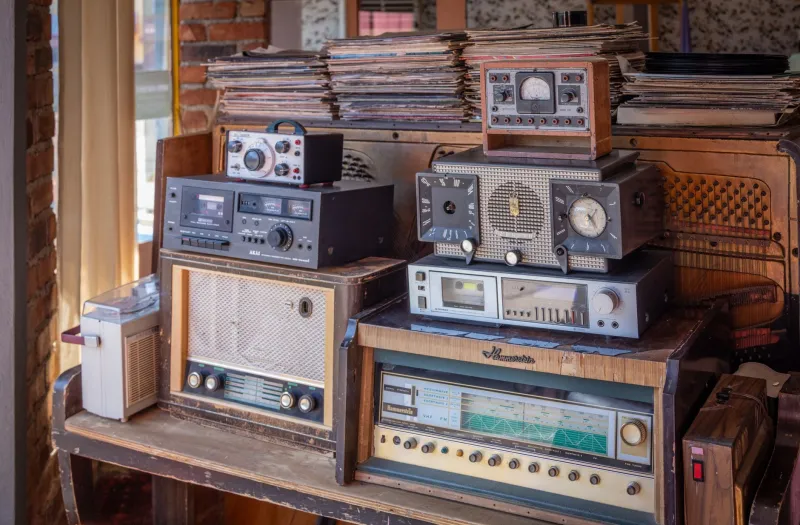
There is a particular scene that recurs across decades of American post-apocalyptic storytelling, wearing different costumes but carrying the same emotional weight: a survivor, surrounded by the wreckage of civilization, reaches not for a device with a touchscreen but for something older. A needle drops onto a vinyl record. A typewriter carriage returns with a mechanical clack. A shortwave radio crackles to life through a web of copper wire and salvaged batteries. In these moments, the narrative makes an implicit argument—one that grows louder with each retelling. The future, it insists, will be preserved not by the technologies we trust most today, but by the ones we abandoned.
This is not mere nostalgia dressed in narrative clothing. It is something more deliberate, more unsettled, and worth examining with care.
The Fragility Hidden in Plain Sight
To understand why fiction gravitates toward analog resurrection, one must first reckon with what digital infrastructure actually is: an extraordinarily complex, interdependent system that requires continuous power, maintained servers, functioning satellites, and institutional oversight to remain legible at all. Remove any one of those pillars and the data does not simply become inaccessible. In many cases, it ceases to exist in any meaningful sense.
Analog technology operates on an entirely different premise. A vinyl record pressed in 1962 requires nothing more than a needle and a rotating surface to surrender its information. A letter written in ink on acid-free paper will communicate its contents to any literate reader centuries hence, provided the physical object survives. A hand-wound clock will mark the passage of hours regardless of whether any grid remains operational. These objects carry their meaning within themselves, without mediation, without infrastructure, without permission from any network.
Post-apocalyptic fiction has understood this distinction intuitively for decades, even when its authors may not have articulated it in precisely these terms. The analog object is, in narrative terms, sovereign. It does not depend on anything outside itself to remain true.
What the Stories Are Actually Saying
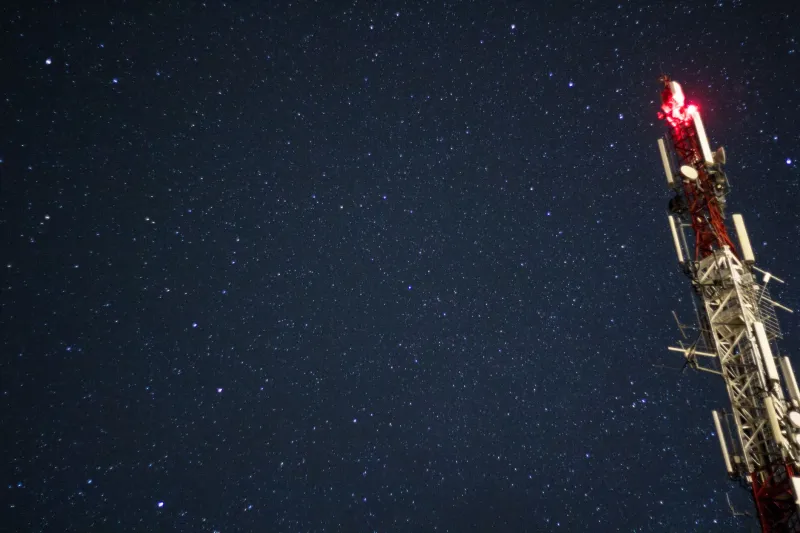
Consider the cultural weight that shortwave radio carries in American apocalyptic fiction. From The Road to countless dystopian novels and prestige television series, the crackling signal from a distant transmitter functions as proof of continued human presence—and, crucially, it is a proof that requires no corporate infrastructure, no ISP, no functioning cellular tower. The signal travels through physics itself. It cannot be deplatformed. It cannot be deleted by a server migration gone wrong.
The typewriter occupies a similarly charged symbolic space. In a world where documents exist as files on drives that require power and compatible software to render, the typewritten page is an act of radical permanence. Several post-apocalyptic narratives have leaned into this quality explicitly, depicting typewritten records as the only reliable historical archive remaining after digital systems collapse. The machine's mechanical stubbornness—its insistence on leaving a physical impression—becomes, in these stories, a form of moral courage.
Vinyl records carry perhaps the most emotionally resonant symbolic load of all. Music streaming, by contrast, is among the most ephemeral of cultural forms: licenses expire, platforms shutter, catalogs vanish overnight. A record pressed in Muscle Shoals, Alabama in 1971 will play its music for any listener who possesses a functioning turntable, regardless of what streaming agreements have or have not survived the collapse. In apocalyptic fiction, the act of placing a needle on a record is frequently staged as an act of defiance against oblivion—a small, fierce insistence that beauty was here, that it can be recovered, that it belongs to whoever finds it.
The Anxiety Beneath the Aesthetic
It would be easy to read this recurring fictional motif as simple romanticism—a longing for simpler times dressed up in apocalyptic scenery. But the pattern is too consistent, too emotionally urgent, to be dismissed that easily. What these narratives are processing, with varying degrees of self-awareness, is a genuine and widespread anxiety about the nature of contemporary life.
Americans in the twenty-first century have entrusted an extraordinary proportion of their cultural memory, personal history, and practical knowledge to systems they do not own, do not understand, and cannot repair. Photographs exist as compressed files on servers maintained by corporations whose business models are subject to change without notice. Music collections are licenses, not possessions. Books purchased from certain digital retailers can be remotely deleted. The accumulated record of a life—its communications, its documents, its creative output—may exist in formats that will be entirely unreadable within a generation, assuming the platforms that host them survive that long.
Post-apocalyptic fiction does not simply imagine a world in which these systems fail. It imagines what survives when they do—and the answer, again and again, is the tangible, the mechanical, the obsolete. This is not an accident of genre convention. It is a cultural symptom.
The Object as Witness
There is a philosophical dimension to this phenomenon that deserves direct acknowledgment. Analog objects function, in the logic of apocalyptic narrative, as witnesses. They were present. They bear the physical marks of their creation and use. A record sleeve shows the wear of repeated handling. A typed page carries the idiosyncrasies of a particular machine's alignment. A hand-drawn map reveals the priorities and anxieties of whoever drew it through the details they chose to include or omit.
Digital files carry none of this testimony. They can be copied perfectly, infinitely, without any trace of their history. This quality—so often celebrated as an advantage—becomes, in apocalyptic fiction, a kind of moral vacancy. The analog object has a body. It ages. It can be damaged and repaired. It participates in time in a way that a digital file, by its nature, cannot.
Fiction has always been drawn to objects that bear witness, that carry history in their physical substance. The analog device in post-apocalyptic narrative is simply this archetype made explicit: the thing that remembers because it cannot forget, that endures because its endurance requires no maintenance from a civilization that no longer exists.
The Last Signal
There is something worth sitting with in the fact that these stories speak so consistently to American audiences at this particular cultural moment. The United States has been, for decades, among the most aggressive adopters of digital infrastructure, and among the most willing to replace physical cultural objects with their digital equivalents. The anxiety that post-apocalyptic fiction channels through its analog imagery is, in a meaningful sense, a specifically American anxiety—the unease of a culture that has moved very fast in a single direction and occasionally, in the dark hours, wonders what it has left behind.
When the lights go out in these narratives, it is the turntable that speaks. It is the shortwave radio that calls across the silence. It is the typewritten page, yellowing at the edges, that tells whoever finds it: we were here, and this is what we knew, and we made it permanent because we were afraid of being lost.
Perhaps the most honest thing one can say about this recurring fictional obsession is that it is not really about the end of the world at all. It is about the fear of vanishing without a trace—and the quiet, stubborn hope that something made by hand might outlast the systems we built to replace our hands.