Static and Survival: Why the Radio Tower Endures as Fiction's Most Powerful Symbol of Hope
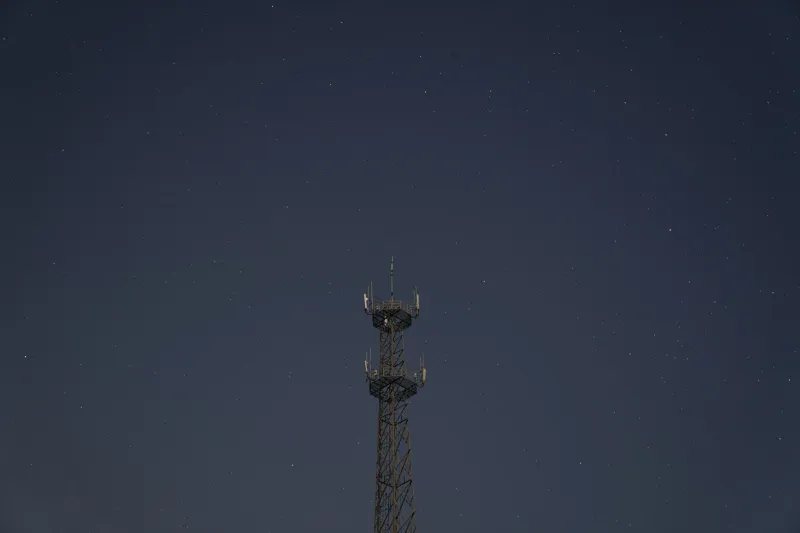
There is a particular kind of dread that comes not from silence, but from the moment before silence — the long, crackling hiss of a frequency that should carry a voice and does not. American storytellers have understood this for decades. Yet only recently has the radio tower, that rusted sentinel on the edge of every small town, claimed its place as one of post-apocalyptic fiction's most resonant and recurring symbols.
The question worth asking is not merely why radio survives the end of the world in so many narratives. The more illuminating question is why audiences find its survival so emotionally necessary.
A Technology Built for the Void
Radio predates the internet by nearly a century, and it predates reliable long-distance telephony for the general public by decades. Its architecture is, at its core, a broadcast into uncertainty — a signal sent outward with no guarantee of reception. That fundamental asymmetry, the act of speaking without confirmation that anyone is listening, maps almost perfectly onto the emotional geography of apocalyptic fiction.
When writers place a character behind a microphone at the end of civilization, they are drawing on something older than any specific technology. They are invoking the campfire storyteller, the town crier, the preacher addressing a congregation that may or may not still believe. The radio operator in post-collapse fiction is simultaneously a journalist, a priest, and a ghost — transmitting into a world that may have already moved on without them.
This symbolic weight is not accidental. Independent and pirate radio stations, in particular, carry a countercultural charge that mainstream broadcast networks cannot replicate. They suggest a world where institutional authority has failed and individual voices have filled the gap. In the American cultural imagination, that scenario is both a nightmare and a founding myth.
The Podcast as Emergency Broadcast
The emergence of the podcast medium in the early 2000s created an unexpected laboratory for this kind of storytelling. Productions such as The Message, Limetown, and Steal the Stars demonstrated that audio drama could generate genuine unease precisely because it withheld the visual cues audiences had come to rely upon. The listener was forced into the same position as the character: receiving incomplete information through an unreliable channel, constructing meaning from fragments.
More recent productions have leaned even further into the emergency broadcast aesthetic. Simulated EAS alerts, distorted transmission effects, and the deliberate mimicry of real-world radio protocols have become standard tools in the audio fiction arsenal. The effect is disorienting in a way that even the most accomplished visual storytelling struggles to replicate. A television series depicting the end of the world reminds the viewer, at every moment, that they are watching. A well-constructed audio drama, heard through earbuds in a darkened room, offers no such reassurance.
The intimacy of the medium deserves particular attention. Radio, and its digital descendant the podcast, arrives directly in the ear. There is no screen mediating the experience, no frame to remind the audience of the boundary between fiction and reality. When a voice crackles through static to announce that the eastern seaboard has gone dark, the body responds before the intellect catches up.
Ham Radio and the Mythology of the Prepared Individual
Beyond the broadcast drama, a distinct tradition has emerged around the ham radio operator as protagonist. In novels ranging from mainstream thrillers to independent science fiction, the licensed amateur radio enthusiast has become a recurring figure: technically competent, socially marginal, and unexpectedly essential when every other communication infrastructure collapses.
This character type resonates strongly within the American context, where self-reliance carries deep cultural and political significance. The ham operator does not wait for FEMA or the National Guard. They string antenna wire between trees, power their equipment from salvaged batteries, and reach across hundreds of miles to find other survivors. They are, in the fiction's moral framework, the people who were paying attention when everyone else was not.
What makes this figure compelling rather than merely ideological is the specificity of the knowledge involved. Ham radio operation requires genuine technical literacy — frequency management, propagation theory, equipment maintenance. Fiction that engages seriously with this knowledge creates a texture of authenticity that elevates it above simple survivalist fantasy. The reader or listener understands, at some level, that the scenario described is not entirely implausible.
The Sound of the Last Winter
There is a reason that so many post-apocalyptic narratives, regardless of their primary medium, eventually find their way to a radio scene. The image of a lone operator, hunched over glowing equipment in a darkened room, transmitting a message into uncertain silence, distills the entire emotional project of the genre into a single tableau.
It asks: Is anyone out there? It acknowledges: I may never know. And it insists, despite that uncertainty: I will keep transmitting.
That insistence is, perhaps, the most honest thing fiction can say about human endurance. Not that survival is guaranteed, or that rescue is coming, but that the impulse to reach across the dark toward another voice is itself a form of survival — the most essential form, the one that precedes every other.
The radio tower does not promise connection. It promises only the attempt. In a genre defined by collapse and loss, that distinction matters enormously.
Why Audio Succeeds Where Other Mediums Falter
Film and television excel at depicting the visual spectacle of apocalypse — the burning city, the empty highway, the collapsed bridge. These images are powerful, but they are also, in an important sense, complete. They show the audience what the end looks like, and in doing so, they limit the imagination's involvement.
Audio fiction operates differently. The listener constructs the scene from voice, sound design, and silence, and that construction is necessarily personal. The ruined city one listener imagines is not the ruined city another listener imagines. The fear is not shared but individual, assembled from each person's own archive of dread.
This is precisely why the radio broadcast, as both subject and form, occupies such a privileged position in apocalyptic storytelling. The medium and the message reinforce each other. A story about voices reaching across a broken world is most effectively told as a voice reaching across whatever darkness surrounds the listener at the moment of reception.
The static, in the end, is not noise. It is the sound of everything that has been lost, pressing against the frequency where the signal still, somehow, persists.