After the Fall, the Garden: Understanding America's Appetite for Gentle Apocalypse
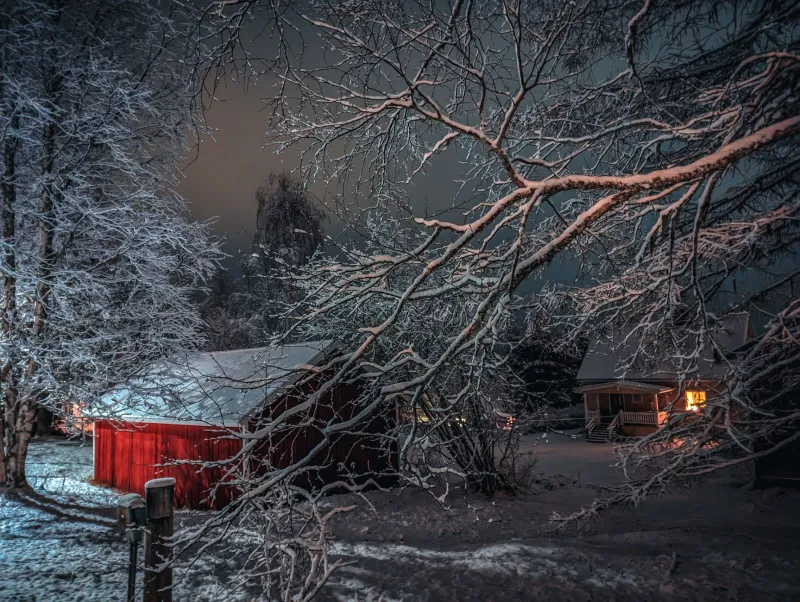
Imagine a world in which civilization has ended. The power grid is silent. The federal government is a memory. Supply chains, financial systems, and the relentless acceleration of modern life have all, at last, ground to a halt. Now imagine that in this world, someone is baking bread. A neighbor has brought over seeds saved from last summer's tomatoes. A child is learning to read by firelight, and the evening is, against all reasonable expectation, peaceful.
This is the cozy apocalypse — and it is having a remarkable cultural moment.
Across novels, web serials, video games, and online fiction communities, a distinct subgenre has emerged that decouples societal collapse from terror and recouples it with something far more unexpected: domesticity, intimacy, and a kind of hard-won contentment. Understanding why this aesthetic has found such a devoted audience among Millennials and Gen Z Americans requires looking not at the stories themselves, but at the conditions that made those audiences so ready to receive them.
A Genre Built from Exhaustion
The cozy apocalypse did not emerge in a vacuum. It emerged from a generation — or more precisely, two generations — that came of age under an unusually sustained weight of systemic anxiety. Millennials entered adulthood during the 2008 financial crisis, watched their career trajectories bend under the force of structural economic change, and found homeownership and financial stability receding toward a horizon that kept moving. Gen Z inherited an internet that had already curdled, a climate crisis that was no longer hypothetical, and a pandemic that demonstrated, with brutal clarity, how quickly the ordinary architecture of daily life could be dismantled.
Against this backdrop, the traditional apocalypse — violent, chaotic, defined by scarcity and predation — offers little comfort. It simply amplifies the anxieties that already saturate waking life. The cozy apocalypse offers something different: the fantasy of simplification. Of a world in which the overwhelming complexity of contemporary American existence has been stripped away, leaving only what is essential, manageable, and human-scaled.
The Particular Appeal of Aftermath
What the cozy apocalypse rarely depicts is the collapse itself. The event — whether pandemic, environmental catastrophe, or some unnamed systemic failure — typically occurs before the narrative begins. Readers and players arrive in the aftermath, when the worst has already happened and the work of rebuilding quiet, sustainable lives is already underway.
This is a meaningful structural choice. By eliding the catastrophe, these stories avoid the trauma that would otherwise dominate the emotional landscape. The audience is spared the spectacle of violence and loss and delivered directly into a world that has, in a sense, already done its grieving. What remains is the garden, the community meeting, the careful inventory of preserved foods, the slow and deeply satisfying work of making something livable from what is left.
For readers navigating information overload, economic precarity, and the ambient dread of climate projections, this temporal positioning is not escapism in the pejorative sense. It is, more precisely, a form of emotional rehearsal — an imaginative space in which the feared event has occurred and life, stripped of its most exhausting complexities, continues.
Works That Define the Mode
Several texts have become touchstones for audiences drawn to this aesthetic. Emily St. John Mandel's Station Eleven, while not without its moments of darkness, has been widely embraced for its insistence on the persistence of art, theater, and human connection in a post-pandemic landscape. Its television adaptation deepened this quality, lingering on the textures of rebuilt community life with an almost meditative attention.
The video game Stardew Valley, while not explicitly apocalyptic, has been adopted by the cozy collapse community as a kind of ur-text — a vision of agricultural simplicity and neighborly reciprocity that functions as a direct rebuke to late-capitalist overwork. Its creator has spoken about designing the game as a response to the alienation of corporate employment, and its audience has received it, in part, as a model for post-collapse living.
More recently, web serial fiction communities on platforms like Royal Road and Archive of Our Own have produced an enormous volume of cozy apocalypse content, much of it centered on the specific pleasures of homesteading, skill acquisition, and the formation of small, mutually supportive communities. These stories tend to be long, deliberately paced, and deeply attentive to practical detail — exactly the qualities that make them feel, to their readers, like preparation rather than mere entertainment.
The Critique Hidden in the Comfort
It would be a mistake to read the cozy apocalypse as politically naive. Beneath its warmth lies a sustained implicit critique of the systems whose absence makes the warmth possible. In these narratives, the end of corporate supply chains is frequently presented as a liberation. The collapse of digital surveillance infrastructure allows characters to exist, for the first time, without being tracked, monetized, or algorithmically managed. The dissolution of hierarchical workplace structures enables genuine community governance.
The cozy apocalypse does not celebrate destruction. But it does, quietly and consistently, suggest that certain aspects of contemporary American life were themselves a form of violence — one so normalized as to be nearly invisible until it was gone.
This is the genre's most serious intellectual contribution, and it is one that its largely young audience appears to receive with considerable recognition. For generations that have grown up with the language of hustle culture, productivity optimization, and the colonization of every waking hour by digital engagement, the vision of a world in which those pressures simply no longer exist carries a weight that goes well beyond entertainment.
Finding Peace at the End of Everything
There is, finally, something worth honoring in the emotional logic of this genre, even as we examine it critically. The cozy apocalypse asks a question that the traditional end-times narrative rarely pauses to consider: what if the ending was also, in some important sense, a beginning? What if the structures we lost were the very structures that had been preventing us from living as we actually wished to live?
These are not comfortable questions. They sit uneasily alongside the genuine suffering that any real collapse would entail. But they are, for a generation that has watched the world's most powerful institutions fail them in ways both dramatic and mundane, questions that feel urgently worth asking.
The last winter, as any gardener knows, is always followed by a spring — if you have put up enough provisions, found the right people, and learned, at last, to tend something with your own hands. Whether that spring is possible is the question contemporary American life keeps refusing to answer. The cozy apocalypse, in its quiet and domestic way, insists on imagining it anyway.