Marked on the Calendar: The Strange Solace of Knowing Exactly When Everything Ends
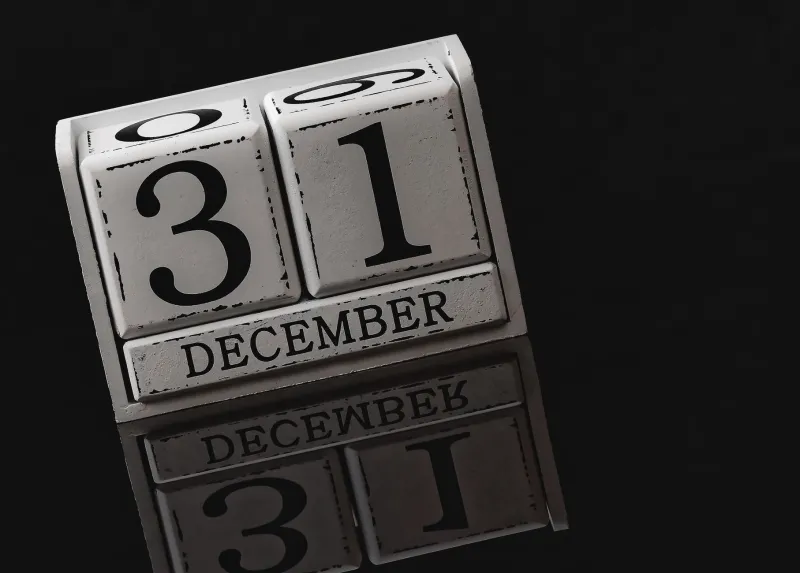
There is a moment in certain apocalyptic films — the kind that announce their catastrophe with numerical precision — when the audience does not recoil. They settle. A comet will strike in forty-eight hours. A plague will reach critical mass in seventeen days. The sun will expand beyond survivable range in exactly four years, two months, and eleven days. The specificity does not horrify. It organizes.
This is worth examining carefully, because it reveals something unsettling about the American relationship with uncertainty — and about why the fiction we consume at the edge of darkness so often reaches for the clock before it reaches for the wound.
The Unbearable Weight of the Indefinite
American culture is, by most reasonable assessments, saturated in ambient dread. Economic instability, ecological deterioration, political fracture — none of these arrive with announced deadlines. They accumulate. They compound. They do not send a notification.
This is the particular cruelty of slow civilizational decay as a lived experience: it offers no terminus. There is no moment at which one may say, definitively, this is the last day of the world as it was. The collapse, if it is happening, happens gradually and then everywhere at once, and the human mind — calibrated by evolution for discrete threats, for predators with arrival times — finds this mode of ending almost impossible to process.
Apocalyptic fiction with a fixed date solves this problem with elegant brutality. It transforms ambient dread into a specific appointment. And Americans, conditioned by a culture that prizes scheduling, productivity, and the management of time as a moral virtue, respond to that transformation with something resembling gratitude.
The Countdown as Narrative Mercy
Consider the architecture of the countdown narrative. Films such as Seeking a Friend for the End of the World or the television series The Leftovers — the latter dealing in a kind of retroactive precision, an event already concluded — demonstrate that the value of a fixed endpoint is not merely dramatic. It is psychological. When characters know the date, they are freed from the paralysis of uncertainty. They make choices. They reconcile. They love people they had been postponing loving.
The countdown does not simply build tension. It grants permission. Permission to stop pretending that the ordinary architecture of daily life — the deferred conversations, the unvisited relatives, the abandoned ambitions — will eventually be attended to. The deadline makes the authentic unavoidable.
Audiences watching these narratives are not merely entertained. They are, in a carefully controlled and safely fictional manner, rehearsing. Practicing the version of themselves they might become if the indefinite were suddenly made definite.
Precision as a Form of Control
There is a clinical dimension to this preference worth acknowledging directly. Research into anxiety consistently identifies uncertainty — not danger itself, but the unknown probability of danger — as among the most psychologically taxing conditions a person can endure. Studies have demonstrated that people frequently prefer a guaranteed negative outcome over an uncertain one, even when the uncertain outcome carries a statistical chance of being benign. Certainty, even terrible certainty, reduces the cognitive load of anticipation.
Apocalyptic fiction with specific end dates enacts this dynamic on a civilizational scale. The audience is handed the worst possible news — everything ends — and in exchange, they receive the one thing ambient modern dread withholds: a fixed point on the horizon. The world will end. But it will end then, not in the shapeless whenever of slow systemic failure.
This is why the asteroid narrative — with its trajectory calculations, its impact windows, its precise countdown to the final second — remains among the most emotionally coherent forms of apocalyptic storytelling available to American audiences. It takes the largest possible catastrophe and renders it manageable through the application of knowable information. Science, in these narratives, does not save humanity. But it explains the ending, and explanation, however terrible, is preferable to mystery.
What Open-Ended Extinction Cannot Offer
By contrast, the slow apocalypse — the kind that does not arrive on a date but accumulates across decades — tends to produce in fiction a different emotional register entirely. The road stretches endlessly forward. The collapse is already complete and also somehow ongoing. There is no countdown, no impact window, no morning when everything changes. There is only the long, cold continuation.
This mode of storytelling is arguably more honest about the nature of actual civilizational risk. Climate disruption does not have an agreed-upon impact date. Democratic erosion does not arrive by asteroid. The threats most likely to reshape American life in the coming century are precisely the kind that resist the narrative satisfaction of a clock.
And yet these stories, however artistically significant, do not offer the same strange comfort as the dated apocalypse. They cannot. The open-ended extinction scenario holds up a mirror to the ambient dread rather than resolving it. It confirms the feeling without providing the release.
The American Calendar and the Need for a Final Entry
There is something distinctly American in the preference for scheduled catastrophe. This is a culture that quantifies grief into stages, that structures recovery into programs, that believes — with a sincerity that is neither cynical nor naive — that most problems can be addressed if properly organized. The dated apocalypse fits this cultural architecture. It is a problem with a deadline.
And Americans, whatever their other disagreements, understand deadlines.
The fiction that places the end of everything on a specific date is not, ultimately, a fantasy of destruction. It is a fantasy of clarity. Of a world in which the most important question — how much time do we have? — finally receives an honest answer. In the real world, that answer is withheld indefinitely. In fiction, it is written on the calendar in permanent ink.
When the lights go out at last, there is a version of that ending that Americans find almost tolerable: the version they saw coming, the version they had time to prepare for, the version that arrived exactly when promised.
The last winter is bearable, it seems, if you know which winter it is.