Frozen in Light: The Quiet Desperation Behind America's Obsession with Being Photographed
There is a particular kind of stillness that descends on a person the moment before a photograph is taken. The breath held, the chin tilted, the expression arranged. In that suspended instant, something ancient and anxious is at work — something that has very little to do with aesthetics and everything to do with survival.
Americans are photographing themselves at a scale that would have been incomprehensible to any prior generation. The numbers are staggering by any measure: over one trillion photographs were taken globally in 2023, and the United States accounts for a disproportionate share of that volume. Professional portrait sessions are booked months in advance. Families commission annual documentation with the seriousness once reserved for legal matters. And on platforms like Instagram, the curation of a personal visual archive has become a second vocation for tens of millions of ordinary people who would never describe themselves as photographers.
The conventional explanation — that social media created a culture of narcissism — is too shallow to be satisfying. Narcissism has always existed. What is new is the particular quality of dread that appears to be driving the compulsion.
The Archive as Argument Against Oblivion
In the literature of endings — fiction, philosophy, and the quieter corners of psychology — there is a recurring preoccupation with what persists after a person disappears. Not the body, not the possessions, but the evidence. The proof that someone moved through the world and left an impression upon it.
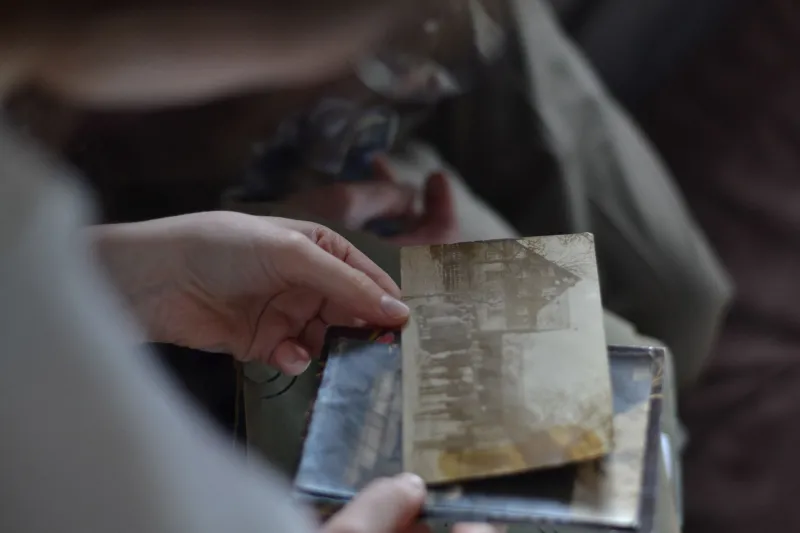
The photograph has always served this function to some degree. Victorian mourning portraits, Depression-era family documentation, the Kodak moments of mid-century suburbia — each era has used the image as a hedge against forgetting. But those earlier practices were episodic. The contemporary American relationship with self-documentation is continuous, compulsive, and calibrated with a precision that suggests something more urgent than nostalgia.
High-resolution portraiture, carefully lit and professionally retouched, operates as a kind of existential insurance policy. The logic, rarely spoken aloud, runs something like this: if I am rendered in sufficient detail, I cannot be reduced to nothing. The megapixels become a bulwark. The sharpness of the image becomes a metaphor for the sharpness of a life that deserves to be remembered.
This is not vanity. Or rather, it is vanity transformed by fear into something far more poignant.
Curating the Self Before the Curtain Falls
The rise of the "digital legacy" industry is instructive here. Services that organize, preserve, and transfer photographic archives to future generations have proliferated across the country. Estate attorneys now routinely advise clients on the disposition of their social media accounts alongside their financial assets. Tech companies offer tools for designating posthumous account managers. There are apps designed specifically to ensure that a person's photographs outlive them in accessible, organized form.
These are not fringe services patronized by the eccentric or the morbid. They are mainstream offerings, marketed with the same matter-of-fact professionalism as life insurance — which, of course, they essentially are.
What is particularly revealing is the aesthetic language that has emerged around this practice. The photographs that Americans are most anxious to preserve tend to share certain qualities: warmth of tone, softness of light, an atmosphere of stillness that reads as timeless rather than contemporary. The golden-hour portrait. The candid moment rendered in film grain. The image that appears, even when freshly taken, to belong already to the past.
This aesthetic is not accidental. It is the visual grammar of elegy. Americans are photographing themselves as if they are already being remembered.
When the Image Becomes the Identity
There is a darker dimension to this phenomenon that deserves direct examination. For a significant portion of the population, the photographic record has ceased to be a representation of the self and has become, in some functional sense, a replacement for it.
The effort invested in constructing a coherent, beautiful, emotionally resonant visual archive can exceed the effort invested in the life that archive is meant to document. The photograph of the family gathered at Thanksgiving is curated with more deliberate care than the conversation that occurred during the meal. The portrait session captures a version of the person that the person may never actually inhabit. The Instagram grid tells a story of a life that is, at minimum, heavily edited.
This is not a moral failing. It is a symptom. When the future feels genuinely uncertain — when the cultural atmosphere is saturated with narratives of collapse, disruption, and irreversible change — the impulse to control at least the record of one's existence becomes intensely appealing. If the world ahead cannot be trusted, then perhaps the world already lived can be secured in amber.
The photograph promises what the future cannot: permanence.
What We Fear the Darkness Will Erase
In the broader context of American cultural anxiety, the obsession with photographic self-documentation connects to a web of related preoccupations. The fear of being forgotten is not separable from the fear of a future in which there is no one left to remember. The meticulous digital archive is, in part, a message in a bottle addressed to a civilization that may or may not persist long enough to read it.
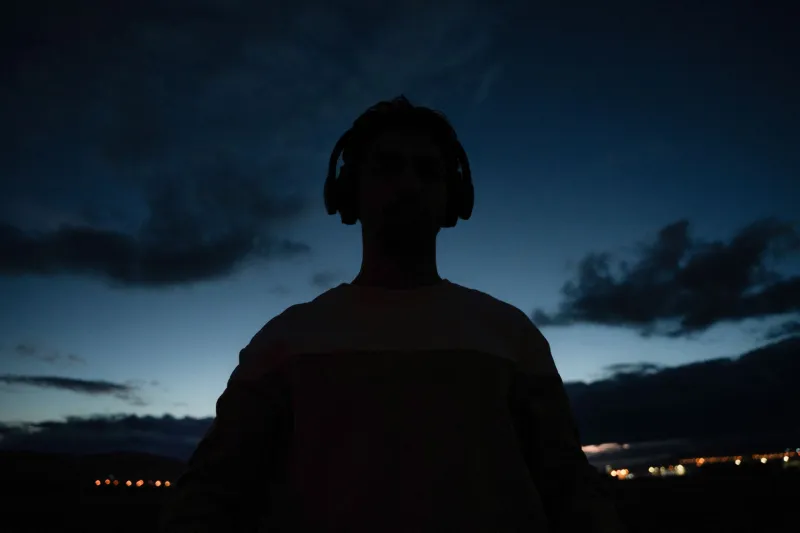
This is why the aesthetics of contemporary self-documentation so frequently borrow from the language of aftermath. The abandoned-building backdrop. The overgrown field. The single figure standing against an enormous, indifferent sky. These images are not merely fashionable. They are rehearsals for a particular kind of ending — one in which the person has vanished but the image endures.
There is something both heartbreaking and quietly heroic in this impulse. To insist on being seen, to demand that one's existence be recorded in sufficient resolution to resist the blur of time, is to push back against a darkness that Americans increasingly sense is gathering at the edges of everything they have built.
The Camera as Final Witness
The photograph has always been, at its core, a confrontation with mortality. Roland Barthes understood this when he wrote that every photograph is a certificate of the past, a confirmation that what is shown was. The camera does not lie about this: to be photographed is to be fixed, to be made into evidence, to be transformed from a living process into a finished fact.
What is new in the contemporary moment is the scale and the desperation of the project. Americans are not merely documenting their lives. They are building archives designed to outlast not just themselves but potentially the infrastructure of the civilization that would house those archives. Cloud storage. Hard drives kept in climate-controlled rooms. Print-on-demand photo books ordered in multiples and distributed among family members in different geographic locations, as if against the possibility that any single location might not survive.
The last photograph, when it comes, will not announce itself as such. It will look like all the others — carefully composed, warmly lit, suffused with the quiet insistence that this moment, and the person standing in it, deserved to be preserved.
That insistence is not foolish. In a culture that senses the winter closing in, it may be the most human response available: to hold up a light, however small, and say — I was here. I existed. Do not let the dark take this from me.