Thirty Days to the End: Why Americans Need Their Apocalypses on a Schedule
There is a particular kind of dread that has no shape. It does not announce itself at the door or mark itself on a calendar. It simply accumulates, day after day, like sediment at the bottom of a reservoir—invisible until the water clears, and by then it is too late to do anything but stare. This is the dread that defines the slow-burn collapse narrative, the apocalypse that arrives not as an event but as a condition. And it is, by nearly every measurable cultural indicator, the kind of apocalypse Americans find hardest to endure.
What they prefer, it turns out, is the countdown.
The Clock as Mercy
Consider the storytelling architecture of films like Don't Look Up, Seeking a Friend for the End of the World, or the foundational disaster spectacles that have populated American multiplexes for decades. In each case, the destruction is enormous, the stakes are absolute, and the outcome is rarely in doubt. Yet audiences return to these stories not despite their finality but because of it. The comet has a known trajectory. The plague has a modeled endpoint. The asteroid will strike on a Tuesday.
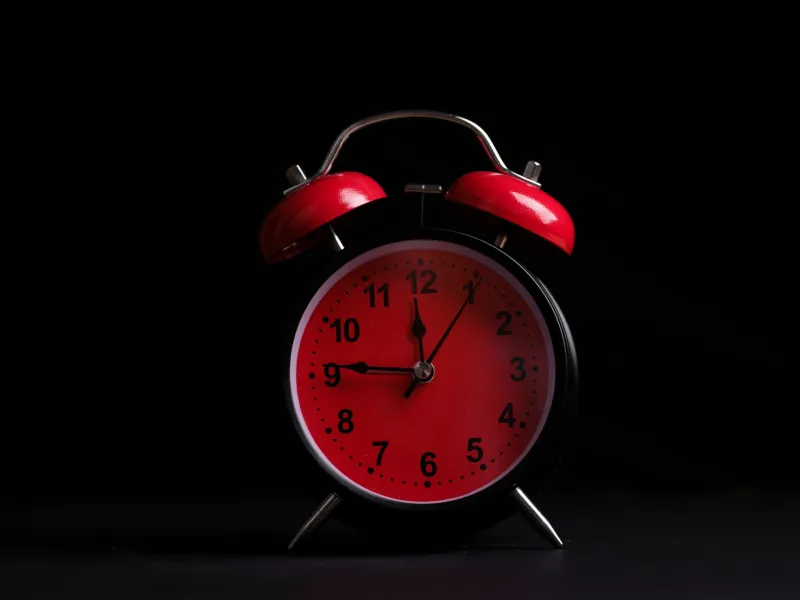
There is mercy embedded in that precision. When the end carries a timestamp, the psychological contract between audience and narrative shifts in a fundamental way. The terror of ambiguity—that formless, unscheduled anxiety that defines so much of contemporary American life—is temporarily suspended. In its place arrives something that functions, paradoxically, as relief: the knowledge that uncertainty itself has an expiration date.
Psychologists who study anticipatory grief have long noted that defined timelines, even devastating ones, allow individuals to organize their emotional responses in ways that open-ended uncertainty does not. The terminal patient who receives a prognosis, however grim, frequently reports a strange clarity. The waiting, in some essential sense, is over. What remains is the living—compressed, clarified, and urgent in a way that ordinary time rarely permits.
Fiction appears to understand this instinctively.
Scheduling the Unthinkable
The appetite for deadline-driven apocalypse is not a recent development in American storytelling, but it has intensified in direct proportion to the cultural conditions that make slow-burn anxiety so pervasive. Consider the specific anxieties that have defined American life over the past two decades: economic precarity that worsens gradually rather than crashing decisively, climate change that promises catastrophe across generational timescales, political fracture that escalates in increments too slow to feel like crisis and too fast to feel like stability.
These are not narratives with third acts. They do not resolve. They simply continue, accumulating consequence without offering the psychological release of a defined conclusion.
Into this environment, the scheduled apocalypse arrives as a corrective fantasy. It does not merely frighten; it organizes. It converts the ambient, unstructured dread of modern American life into something with edges, a beginning and an end, a shape that the mind can hold and examine. The thirty-day countdown is not just a plot device. It is a cognitive prosthetic for a culture that has lost its grip on narrative closure.
What Slow Collapse Cannot Offer
This is not to diminish the power of the slow-burn tradition. Works like The Road, Station Eleven in its more desolate registers, or the grinding societal decay depicted in countless post-collapse novels carry their own devastating authority. They are, in many respects, more honest about the mechanics of civilizational failure—which historically has always been a process rather than an event, a long unraveling rather than a single decisive rupture.
But honesty and comfort are different currencies, and American popular culture has generally preferred to spend the latter.
The slow collapse narrative demands something of its audience that the deadline story does not: the willingness to sit with irresolution. To accept that the worst thing may not arrive as a thunderclap but as a gradual dimming, a series of ordinary days that are each slightly worse than the one before, until the distance between the world as it was and the world as it has become is so vast that no single moment of reckoning can be identified. This is, for many readers and viewers, not cathartic. It is simply exhausting—a mirror held up to the very condition they came to fiction to escape.
The Illusion of Agency
There is another dimension to the scheduled apocalypse that deserves examination: the way a defined timeline creates the appearance of agency, even in circumstances of absolute helplessness.
When the end has a date, characters—and by extension, audiences—can make choices that feel meaningful. They can say goodbye. They can reconcile. They can drive across the country to find someone they love, knowing precisely how many hours remain. The countdown transforms passive victims of circumstance into active participants in their own final chapter. The illusion of control is preserved even as control itself is entirely absent.
This dynamic maps with uncomfortable precision onto certain American cultural values: the deep investment in self-determination, the discomfort with powerlessness, the need to believe that individual action retains consequence even within systems too large to influence. The scheduled apocalypse flatters these instincts. It says: you cannot stop what is coming, but you can decide how to meet it. That is, in the grammar of American mythology, enough.
The slow collapse offers no such consolation. Its horror is precisely that there is no moment at which meaningful action becomes possible, no threshold past which the right choice could have changed the outcome. The damage accumulates quietly, and by the time it is visible, the window for intervention has long since closed.
When the Last Winter Has a First Day
At the heart of this cultural preference lies a question about how Americans have chosen to relate to mortality—collective and individual alike. The scheduled apocalypse is, at its core, a death that announces itself. It arrives with the terrible gift of foreknowledge, allowing its survivors and its victims alike to construct meaning in the time that remains.
The slow collapse offers no such announcement. It simply proceeds, indifferent to the need for meaning, resistant to the narrative conventions through which Americans have traditionally processed loss.
That this latter form is arguably more realistic—that civilizations do not typically end on Tuesdays but rather dissolve across decades—makes it no more palatable. Fiction has never been primarily in the business of realism. It has been in the business of managing what realism cannot.
And so the countdowns continue. The comets are tracked. The plagues are modeled. The asteroids are assigned impact dates with the precision of tax deadlines. Americans watch the clock run down and feel, beneath the terror, something that resembles peace.
The last winter, it turns out, is most bearable when you know exactly when the snow will fall.