Pixels Before the Darkness: How Social Media Became Civilization's Accidental Archive
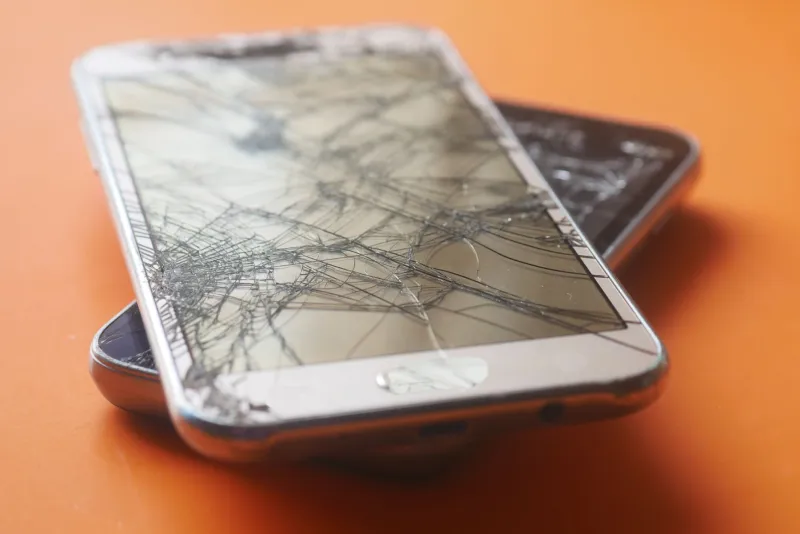
There is a particular kind of horror that does not announce itself with sirens or fire. It arrives quietly, in the form of a loading screen that never resolves, a feed that stops refreshing, a server farm somewhere in the Nevada desert going dark without ceremony. In the most unsettling corners of contemporary dystopian fiction, the end of the world is not marked by the last human breath. It is marked by the last uploaded image — the final timestamp on a post that no one will ever read again.
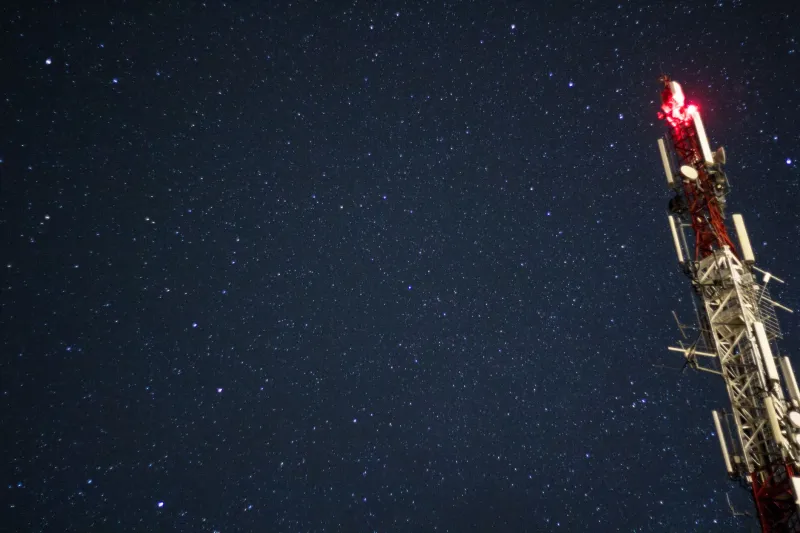
This is the anxiety that has quietly colonized American speculative fiction over the past decade, and it is far more revealing than anything a bunker or a broadcast tower could tell us.
The Archive We Never Meant to Build
Social media platforms were not designed with posterity in mind. Instagram was conceived as a tool for sharing brunch photographs. Twitter — now rebranded and restructured beyond recognition — was built for the fleeting thought, the ephemeral impulse. Facebook promised connection, not conservation. And yet, collectively, these platforms have accumulated something that no library or museum ever could: a granular, moment-by-moment record of ordinary human life at the dawn of the twenty-first century.
We did not set out to build an archive. We built one anyway.
Contemporary dystopian fiction has noticed this, and it has begun to exploit the irony with considerable sophistication. In novels, films, and serialized dark fiction emerging from American writers over the past several years, a recurring figure has taken hold: the character who, as the world collapses around them, becomes consumed not with physical survival but with the preservation of digital memory. They charge dying phones with hand-cranked generators. They screenshot conversations before networks fail. They narrate their own extinction into voice memos, hoping something — some server, some satellite relay — is still listening.
These characters are not eccentrics. They are mirrors.
What We Fear Losing More Than Ourselves
The psychological architecture beneath this fictional obsession is worth examining carefully. Classical apocalyptic literature — the tradition that runs from Shelley's The Last Man through Cormac McCarthy's The Road — concerns itself primarily with the loss of physical civilization. Cities fall. Agriculture collapses. The accumulated knowledge of medicine, engineering, and law dissolves back into ignorance. The tragedy is material.
But the emerging strain of digital-age dystopia operates on a different frequency. Its central grief is not the loss of infrastructure but the loss of witness. The characters who haunt these narratives are not afraid of dying. They are afraid of dying unrecorded — of living through something extraordinary and having no mechanism by which to tell anyone that it happened.
This is a distinctly American variety of existential dread. The United States built its cultural identity on the premise of self-documentation: the diary, the memoir, the immigrant letter home, the frontier journal. Social media is simply the latest and most expansive iteration of that compulsion. To imagine a world in which those platforms vanish — in which the posts simply stop existing, unread and unarchived — is to imagine a civilization that leaves no fingerprints.
The darkness, in this reading, is not death. It is anonymity.
The Fiction That Saw It First
Several works of recent American speculative fiction have approached this territory with particular clarity. Stories set in near-future collapse scenarios increasingly feature protagonists whose primary conflict is not finding food or shelter but deciding what to save from the digital wreckage. Do you preserve your own photographs, or the photographs of strangers? Do you download the texts of literature, or the comment threads beneath them — the raw, unfiltered record of how ordinary people actually responded to the world around them?
These are not trivial questions dressed in narrative clothing. They are genuine archival dilemmas that cultural institutions are already confronting. The Internet Archive, a San Francisco-based nonprofit, has been waging a quiet, underfunded war against digital oblivion for decades. Its Wayback Machine preserves snapshots of websites that no longer exist — ghost pages from the early internet, corporate homepages from companies long dissolved, personal blogs from people who have since died. It is, without exaggeration, one of the most important cultural preservation projects in American history, and most of the country has never heard of it.
Dystopian fiction, at its most perceptive, is simply dramatizing what archivists already know: the internet is not permanent, and we have built our collective memory on a foundation that could, under the right catastrophic conditions, simply cease to exist.
The Last Post
There is a specific image that recurs across this genre of fiction, and it has lodged itself in the cultural imagination with uncomfortable persistence: the final social media post made before a network goes permanently dark. Sometimes it is a photograph — a sunset, a face, a street corner captured in ordinary light. Sometimes it is a few words, typed quickly, without the expectation that they would be anyone's last. In the most effective versions of this narrative, the post is mundane. A cup of coffee. A complaint about traffic. A joke that no longer makes sense without context.
The mundanity is the point. It is what transforms the image from content into artifact.
What dystopian fiction understands — and what we are only beginning to consciously acknowledge — is that the photographs we take without thinking, the posts we compose in idle moments, the location check-ins and the tagged memories and the stories that disappear after twenty-four hours, are the primary record of who we were. Future historians, assuming any exist, will not reconstruct early twenty-first century American life from newspapers or official documents. They will reconstruct it from Instagram grids and Facebook timelines and the comment sections of YouTube videos that somehow survived.
This is either deeply comforting or quietly terrifying, depending on your disposition.
When the Feed Goes Silent
The last winter of any civilization is rarely the one that announces itself. It arrives in increments — a slowing, a quieting, a gradual dimming of signals that were once constant and bright. The fictional characters who obsess over their digital footprints in the final hours understand something that their more pragmatic counterparts do not: that survival without record is a kind of second death.
They are not wrong to feel this way. The compulsion to document, to upload, to share — these are not vanities. They are, at their most essential, acts of defiance against oblivion. Every photograph posted to a server is a small wager against silence. Every caption written is a message in a bottle thrown into an ocean that may or may not still be there tomorrow.
The anxiety driving this strain of contemporary dystopian fiction is not really about the internet. It is about legacy, witness, and the human need to matter beyond the span of a single life. Social media simply gave that ancient need a new and fragile vessel.
When the lights go out — and in these stories, they always do — what we mourn is not the darkness itself. It is everything the darkness swallows without asking permission.