The Final Frame: Why the Last Sixty Seconds of a Film Outlast Everything That Came Before
There is a strange alchemy that occurs in the final moments of a film. Two hours of carefully constructed narrative, of character development and escalating tension, can be reduced in memory to a single image—a door closing, a face turning away, a horizon consumed by fire. Audiences leave the theater carrying not the full weight of a story but rather its closing punctuation mark. In the genres that traffic most heavily in dread and finality, this phenomenon is not merely common. It is, by now, a defining feature of how dark cinema communicates with its viewers.
The question worth asking is not simply which endings are memorable. The more revealing inquiry is why the closing minute of a film so frequently eclipses everything that preceded it, and what that asymmetry tells us about the relationship between storytelling and the particular anxieties of the American audience.
The Architecture of Finality
Filmmakers working in thriller and apocalyptic genres have long understood that the final frame functions differently from any other moment in a picture. Where earlier scenes build tension or establish stakes, the closing image performs a different task entirely: it becomes the lens through which the audience retrospectively interprets everything they have witnessed. A film that ends on ambiguity transforms, in memory, into an ambiguous film. One that closes on devastation recolors every prior scene with the shadow of what was always coming.
This is not accidental craftsmanship. Directors such as Stanley Kubrick, whose closing freeze-frame in Dr. Strangelove converted a satire into something genuinely haunting, understood that the last image a viewer carries out of the theater is, in a very real sense, the film they will describe to others. It is the film they will remember having seen, sometimes decades later, when the specific details of the middle act have long since dissolved.
The brain, confronted with a narrative, applies what psychologists refer to as the peak-end rule: we evaluate experiences based primarily on their most emotionally intense moment and their conclusion. In horror and apocalyptic cinema, these two points frequently converge. The ending is the peak. The filmmakers who understand this construct their final sixty seconds accordingly, compressing maximum emotional resonance into minimum screen time.
When the Last Line Does the Heaviest Work
Dialogue in closing scenes operates under particular pressure. Consider the final exchange in No Country for Old Men, in which Tommy Lee Jones's Sheriff Bell recounts two dreams to his wife at a kitchen table—a quiet, domestic setting that somehow carries the full weight of everything the film has refused to resolve. The Coen Brothers place their thesis not in a confrontation or a revelation but in an old man's murmured recollection. The scene lasts barely three minutes. It is, for many viewers, the only scene they can quote verbatim.
This compression of meaning into final dialogue is a technique that thriller and apocalyptic filmmakers return to repeatedly, precisely because it works. When a character speaks last, they speak with the authority of conclusion. Whatever they say is understood by the audience as the film's argument—its final position on everything it has spent two hours examining. The stakes of those final words are, in consequence, immense. A single miscalculated line can unravel the careful architecture of an entire picture.
Conversely, a perfectly calibrated closing line can redeem a film that has struggled to find its footing. The last words of Chinatown—"Forget it, Jake. It's Chinatown"—arrive as a verdict on human helplessness that the preceding narrative has been building toward without quite articulating. The line does not summarize the film. It crystallizes it.
The Apocalyptic Ending as American Ritual
In the specific context of apocalyptic cinema, closing moments carry an additional cultural charge for American audiences. There is a long tradition, running from the Cold War era through the present day, of films that use civilizational collapse as a framework for examining national anxieties. These films frequently build toward endings that are not resolutions but rather statements—images of what has been lost, or what was never truly secure.
The final shot of Planet of the Apes, with Charlton Heston collapsed before the ruined Statue of Liberty, remains one of the most reproduced images in American film history. It is not a complicated image. Its power derives entirely from its placement: after ninety minutes of displacement and disorientation, the audience is handed a single frame that recontextualizes everything. The horror was never about another planet. It was always about this one.
More recent apocalyptic cinema has grown more restrained in its final statements, trading the explicit landmark for something quieter and, arguably, more unsettling. The closing frames of Take Shelter, in which a vision of catastrophe is confirmed in silence, or the final image of Beasts of the Southern Wild, which transforms a child's march toward the unknown into something between defiance and elegy—these endings resist the clean declaration. They leave the audience in suspension, carrying an image they cannot fully interpret and therefore cannot set down.
Why We Remember the Dark More Clearly
There is a neurological dimension to this phenomenon that deserves acknowledgment. Research in memory formation consistently demonstrates that emotionally negative experiences are encoded more vividly and durably than neutral or positive ones. Fear, grief, and dread create stronger memory traces. For genres that specialize in these emotional registers, the final scene—arriving at the moment of highest accumulated tension—benefits from the most favorable conditions for long-term retention.
This is, in a sense, the dark gift that thriller and apocalyptic filmmakers receive simply by working in their chosen genres. The audience arrives primed for intensity. By the time the final frame appears, the neurological machinery for deep encoding is already fully engaged. A closing image delivered under these conditions has an advantage that no amount of technical craft can entirely replicate in a comedy or a romance.
It also explains why audiences so frequently describe having been "haunted" by the endings of films in these genres—a word that implies involuntary recurrence, the return of an image without conscious invitation. The final frame of a great thriller does not wait to be remembered. It reappears.
The Responsibility of the Last Image
For filmmakers working in dark genres, this reality carries significant weight. The closing minute is not simply the conclusion of a story. It is the version of the story that will persist. It is what the audience will carry into the parking lot, into their cars, into the conversations they have the following morning. It is the image that will surface, unbidden, at three in the morning years later.
The films that understand this responsibility—that treat the final frame as the most consequential real estate in the entire picture—are the ones that endure. They are the ones that audiences return to, not to relive the full narrative, but to return to that last moment, to sit with it again, to try once more to understand what it is doing to them and why they cannot seem to leave it behind.
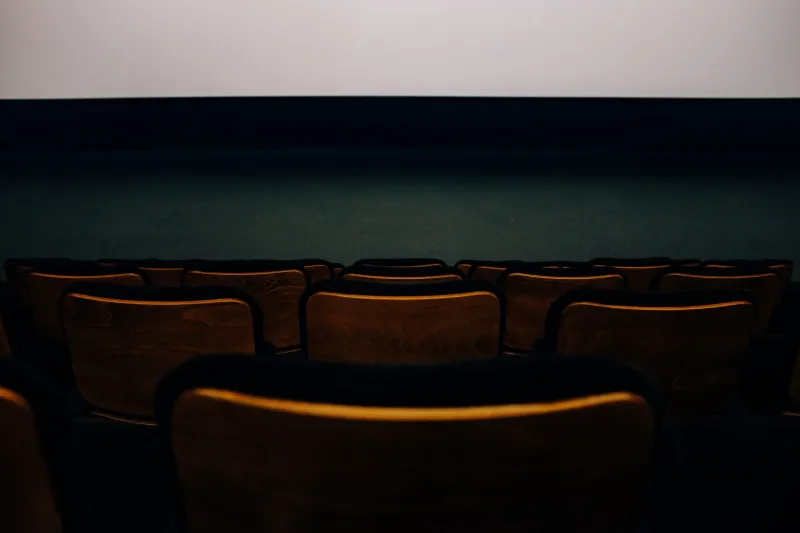
When the lights go out in a theater, the story is not over. For the films that close with genuine power, it has only just begun.