Art After the Ash: What Survives When Civilization No Longer Does
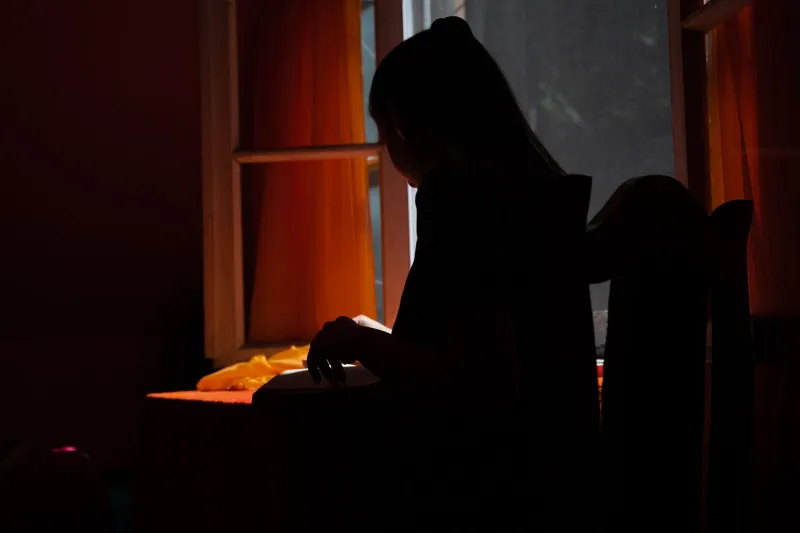
There is a particular scene, recurring across decades of American apocalyptic storytelling, that has no obvious reason to exist. The world has ended. Resources are scarce. Danger is constant and death is probable. And yet, somewhere in the ruins, a character stops. They pick up a brush, or press their fingers to a crumbling wall, or hum a melody to no one in particular. They make something. Not a weapon. Not a shelter. Something beautiful, and entirely unnecessary.
This is not incidental. It is, arguably, the most revealing gesture in the entire genre.
The Unnecessary Act
Survival narratives derive their tension from reduction. Strip away comfort, strip away community, strip away certainty, and what remains? The genre's conventional answer is instinct—the will to eat, to breathe, to persist. But a significant and growing body of apocalyptic fiction refuses this answer, or at least refuses to accept it as complete.
Cormac McCarthy's The Road is perhaps the most celebrated example of a story that seems to reject beauty entirely—and yet it is saturated with it. The prose itself is a kind of defiance, rendering devastation in sentences of austere, almost painful elegance. The father's determination to carry "the fire" is never fully explained in practical terms; it is, at its core, an aesthetic and moral commitment, a refusal to let the world's ending extinguish something that cannot be named but must be preserved.
In television, The Last of Us offers a more explicit version of this argument. Joel and Ellie move through a landscape of gorgeous, creeping ruin—buildings reclaimed by vegetation, cities grown strange and wild in human absence—and the camera lingers on this transformation with something approaching reverence. The show is not merely documenting devastation. It is insisting that devastation has a texture worth attending to, and that the act of attending is itself a form of resistance.
Ruins as Inheritance
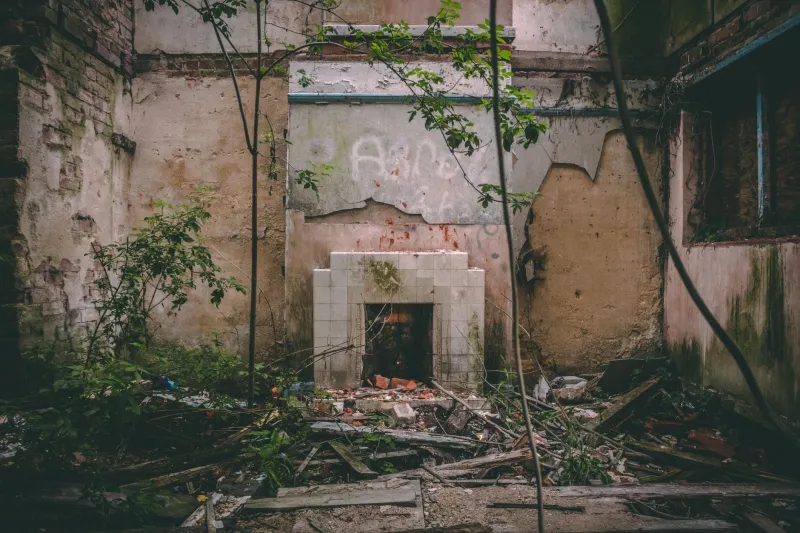
The American relationship to ruins is historically complicated. Unlike Europe, where collapsed cathedrals and crumbling fortifications anchor a lived sense of historical depth, the United States has relatively few ancient ruins of its own. The apocalyptic imagination may, in part, be compensating for this absence. When fiction conjures the overgrown skylines of New York or the flooded avenues of Miami, it is constructing the ruins that American culture has never organically accumulated—granting the landscape a weight and a history it has not yet earned through time alone.
This may explain why so many American apocalyptic narratives are invested not merely in depicting ruined beauty, but in having characters recognize and respond to it. In Emily St. John Mandel's Station Eleven, the traveling Shakespearean theater company does not perform because performance is useful. They perform because, as the story's central motto insists, survival is insufficient. The act of staging King Lear in an abandoned airport terminal is presented not as nostalgia but as necessity—a different kind of necessity than food or warmth, but necessity nonetheless.
The ruins, in these stories, are not simply settings. They are arguments. They propose that what civilization built was not merely functional but meaningful, and that meaning does not automatically dissolve when function does.
The Anxiety Beneath the Aesthetics
To understand why this trope resonates so deeply with American audiences, it is worth sitting with the discomfort it conceals. The compulsion to place art within the apocalypse is not simply optimistic. It is, in many ways, a symptom of profound anxiety—specifically, the fear that modernity has already severed us from the capacity to make genuine meaning.
Consider what these stories consistently imply: that it takes the collapse of Netflix, social media, consumer culture, and professional obligation to create the conditions under which a person might finally paint something honest. The apocalypse, in this reading, is not a catastrophe to be mourned but a clearing. The noise stops, the obligations dissolve, and what remains—if one survives—is the possibility of authentic creative life.
This is a damning commentary on contemporary American existence, dressed in the clothing of genre entertainment. When The Walking Dead lingers on a character carefully tending a garden or sketching in a recovered notebook, the subtext is not merely that beauty persists. It is that beauty was being suppressed—by busyness, by distraction, by the relentless machinery of ordinary life—and that it required the end of everything to finally breathe.
The Preservation Instinct
A related but distinct strand of this tradition focuses not on creation but on preservation. Characters who risk their lives to rescue paintings from burning libraries, or who memorize poems so they cannot be lost, appear across the genre with striking frequency. Ray Bradbury's Fahrenheit 451 is the ur-text here—a story in which the ultimate act of resistance is not violence but memorization, the human body repurposed as an archive.
More recent works have updated this premise without abandoning its core conviction. In A Canticle for Leibowitz, monks preserve fragments of pre-apocalyptic technical knowledge they do not fully understand, treating blueprints and grocery lists as sacred texts. The comedy and the tragedy of this image are inseparable: civilization's most mundane artifacts become relics, and the act of preservation becomes indistinguishable from the act of worship.
What unites these narratives is a terror more specific than the fear of death. It is the fear of cultural amnesia—the possibility that human beings might survive physically while losing every record of what they once imagined, built, and loved. Death, these stories suggest, is survivable in a way that forgetting is not.
What We Are Really Asking
At its deepest level, the persistence of beauty in apocalyptic fiction is a question disguised as a comfort. The question is this: if everything were stripped away—the institutions, the infrastructure, the inherited frameworks that tell us who we are and what our lives mean—would anything remain worth the name of human?
The genre's answer is consistently, almost desperately, affirmative. Yes, the stories insist. Someone will still sing. Someone will still draw on the walls. Someone will cup a dying flower in their hands and look at it for longer than survival requires.
Whether audiences believe this—or merely need to—may be the most revealing question of all. The last winter is long, and cold, and dark. But in the fiction Americans keep returning to, someone always manages, against all reason, to light something other than a fire for warmth.
They light it because it is beautiful. And in a genre defined by endings, that small, stubborn act feels like the most radical statement of all.