Mid-Sentence Into the Void: The Terrifying Power of the Interrupted Broadcast
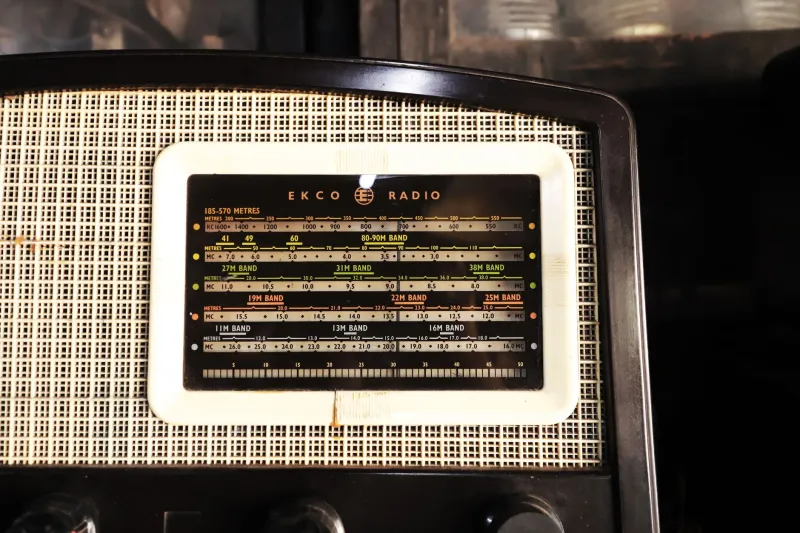
There is a particular species of dread reserved for the unfinished sentence. Not the declaration of catastrophe, not the formal farewell, but the voice that simply — stops. A radio host mid-laugh. An emergency bulletin that never delivers its instruction. A television anchor whose eyes shift toward something off-camera before the signal collapses into grey. In the architecture of apocalyptic fiction, the interrupted broadcast has become one of the most reliably devastating devices available to storytellers, and its power shows no sign of diminishing.
The question worth asking is not merely why these moments work so effectively on an emotional level. The more revealing inquiry is what their persistent presence in American fiction discloses about the anxieties we carry into darkened theaters and late-night reading sessions — anxieties that have only deepened as our civilization has grown more comprehensively wired.
The Grammar of Disappearance
A completed ending, however tragic, offers the mind something to hold. A character who delivers final words, a station that signs off formally, a network that broadcasts a closing message — these represent a kind of grammatical completeness. The sentence ends with a period. The listener knows the transmission is over.
The interrupted broadcast refuses that courtesy. It ends with an em dash, a half-formed syllable, a carrier wave that persists after the voice has gone. This syntactic incompleteness is not incidental to the horror; it is the horror. The human brain is wired to pursue resolution, to complete patterns, to finish what language begins. When that resolution is denied — when the signal cuts out before the crucial word — the imagination floods the silence with its own worst projections.
Writers working in post-apocalyptic and horror fiction have understood this mechanism intuitively for generations. Cormac McCarthy's The Road gestures toward it in its silences. Numerous entries in the found-footage genre deploy it with clinical precision. The radio drama tradition, stretching back to Orson Welles and beyond, built entire lexicons of dread around the possibilities contained in static. What changes across these iterations is not the technique but the cultural resonance it activates.
What the Static Is Actually Saying
To understand why the interrupted broadcast strikes so deep in contemporary American audiences, it helps to consider how radically the stakes of communication have shifted. For most of human history, the absence of a message was unremarkable. People disappeared from contact regularly — traveling, ill, simply out of reach. The silence was not alarming because silence was the default.
Modern networked life has inverted that condition entirely. Connectivity is now the baseline. A friend who does not respond to a message within hours prompts concern. A website that goes dark without explanation generates anxiety. The phone that rings without answer is no longer merely inconvenient — it registers as a kind of small emergency. We have recalibrated our nervous systems around the expectation of perpetual availability, and anything that violates that expectation carries a disproportionate emotional charge.
The interrupted broadcast in fiction exploits precisely this recalibration. When the emergency alert system voice cuts off mid-instruction, it does not merely suggest that something terrible has happened. It activates the same low-frequency alarm that modern Americans feel when they cannot reach someone they depend upon. The static is not neutral absence. It is the sound of a world that has stopped answering.
The Authority That Failed to Explain Itself
There is a secondary dimension to the interrupted broadcast that deserves particular attention: the matter of institutional voice. Emergency bulletins, official news broadcasts, government transmissions — these carry the implicit promise of explanation and guidance. They are, by design, the voices that are supposed to tell us what is happening and what to do about it.
When those voices cut off without completing their message, fiction is doing something more pointed than generating atmosphere. It is staging the failure of institutional authority at the precise moment that authority was most needed. The half-delivered emergency instruction is not simply creepy. It is a dramatization of abandonment — the moment when the systems we were assured would protect and inform us simply ceased to function.
This resonates with particular force in the contemporary United States, where trust in institutional communication has been eroding steadily across partisan lines and demographic groups. The interrupted broadcast taps into a fear that is no longer purely hypothetical: the possibility that when the genuine crisis arrives, the official channels will go silent before they have said anything useful. The static, in this reading, is not merely atmospheric. It is a prediction.
Incompleteness as the Purest Form of Loss
Fiction has long understood that the imagination, given a partial image, will construct something more personally devastating than any explicit depiction could achieve. The monster glimpsed rather than shown. The grief implied rather than described. The interrupted broadcast operates on the same principle, but it extends the effect across time in a way that static imagery cannot.
When an audience encounters a fragmented transmission — a recording that ends abruptly, a signal that loops a meaningless fragment of music, a voice that repeats the same incomplete phrase indefinitely — the incompleteness becomes a kind of ongoing wound. Unlike a concluded tragedy, which the mind can eventually process and file away, the unfinished broadcast refuses closure. It remains perpetually mid-sentence, perpetually unresolved, perpetually demanding the completion that will never arrive.
This is why such moments tend to linger in the memory long after other, more explicit scenes have faded. The interrupted broadcast does not tell us what happened. It leaves us in the position of the transmission itself — suspended, waiting, unable to move forward because the signal has not yet released us.
What We Are Really Afraid of Losing
At its deepest level, the interrupted broadcast in fiction is not about catastrophe at all. It is about connection — specifically, about the terror of a world in which connection is simply, suddenly, no longer available. Not destroyed in some dramatic confrontation, not severed by a comprehensible act of violence, but absent. Gone in the middle of a sentence, without explanation, without ceremony, without the basic courtesy of an ending.
American audiences in particular have reason to find this fear resonant. A culture that has organized enormous portions of its emotional and practical life around digital connectivity — that conducts relationships, commerce, civic participation, and self-understanding through networked channels — has also made itself exquisitely vulnerable to the horror of those channels going dark. The interrupted broadcast is, in this sense, the nightmare version of a notification that never arrives, scaled up to civilizational dimensions.
The static that follows the cutoff is not empty. It is full of everything that was never said, every message that never arrived, every voice that fell silent before it could finish what it started. In the long tradition of American apocalyptic storytelling, few sounds have proven more enduring, or more honest, than that.
When the lights go out, it is not the darkness itself that haunts us. It is the last word we almost heard before it did.