Numbered Into the Dark: The Strange Psychology of Counting Down to Catastrophe
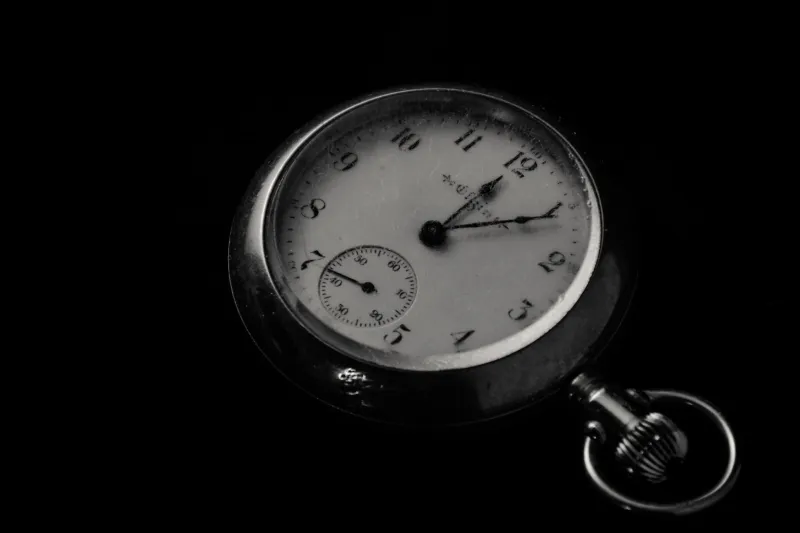
There is a clock in Washington, D.C., that has been ticking toward midnight since 1947. The Bulletin of the Atomic Scientists' Doomsday Clock does not measure hours in any conventional sense. It measures proximity—the estimated distance, expressed in minutes and seconds, between humanity and its own annihilation. As of its most recent adjustment, the clock sits at ninety seconds to midnight, the closest it has ever been. And yet, rather than inspiring paralysis or widespread despair, the announcement of each new setting is met with something closer to grim fascination. People share the update. They discuss it over coffee. They note it, file it, and return to their lives.
This is not indifference. It is something stranger and more revealing: the comfort of the countdown.
The Illusion of Measurement as Mastery
Human beings are pattern-seeking creatures. The mind, confronted with the formless and the unknowable, instinctively reaches for structure—for sequence, for number, for the reassuring logic of a series. Disaster, in its purest form, is the enemy of sequence. It arrives without invitation, disrupts every established order, and refuses to be scheduled. The countdown, then, functions as a kind of psychological countermeasure. By assigning a number to catastrophe, we perform an act of symbolic domestication. We place the uncontrollable inside a frame we understand.
This impulse is ancient. Prophets have always offered dates. Millenarian movements throughout American history—from the Millerites of the 1840s, who gathered on hillsides awaiting an ascension that never came, to the Y2K anxieties that gripped the nation at the turn of the twenty-first century—have drawn enormous followings not despite their specificity, but because of it. A vague sense of impending doom is psychologically corrosive. A specific date is, paradoxically, easier to bear. It gives the mind somewhere to stand.
TikTok and the Ritualization of Reckoning
In recent years, this ancient impulse has found a vivid new expression in the architecture of social media. A particular genre of short-form video has proliferated across TikTok and Instagram Reels, in which creators post simple, often aesthetically minimal clips announcing how many days remain until some anticipated event—an election, a climate milestone, a predicted astronomical phenomenon, or, in the more dramatic corners of the internet, a date associated with speculative collapse scenarios drawn from fringe forums and algorithmic rabbit holes.
These videos accumulate millions of views. The comments beneath them are instructive. Alongside the expected jokes and dismissals, there is a consistent thread of earnest engagement—users who return to the same account each day, who treat the incremental reduction of the number as a kind of communal ritual. 'Day 47,' one creator might post, over footage of an overcast sky. The audience does not need to be told what they are counting toward. The number itself carries sufficient weight.
What these videos provide is not information. They provide rhythm. The countdown transforms ambient dread—that low, persistent frequency of modern American anxiety—into something with tempo and structure. Each decrement is a small ceremony. Each day marked off is a day survived, catalogued, and released.
The Dial Between Dread and Control
Psychologists have long observed that uncertainty is more distressing than negative certainty. Studies on anticipatory anxiety consistently demonstrate that people prefer to know a painful outcome is coming rather than remain in a state of not knowing. The waiting room is worse than the diagnosis. The silence before the phone rings is worse than the news it carries.
Apocalyptic timekeeping operates on precisely this principle. The countdown does not eliminate the threat. It does not reduce the probability of disaster or alter the material conditions that produce it. What it does is convert the threat from something ambient and omnidirectional into something located—placed at a specific point on a line that the mind can trace and traverse. And a threat that can be traced is, in some fundamental cognitive sense, a threat that has already been partially managed.
This is not denial. The individuals who follow doomsday clocks, who track climate tipping-point timelines, who mark their calendars against projections of geopolitical instability, are not pretending the danger does not exist. They are, in many cases, acutely aware of it. What the countdown offers them is not escape from that awareness but a means of organizing it—of giving it walls and a ceiling, of making it habitable.
When the Clock Runs Out
There is, of course, a shadow side to this arrangement. Countdowns that reach zero without incident do not dissolve anxiety; they tend to displace it. The Millerites, after the Great Disappointment of October 22, 1844, did not abandon their worldview. Many reinterpreted the date, adjusted their calculations, and continued. Y2K passed without catastrophe, and within months a new architecture of anticipated collapse had begun to assemble itself in the cultural imagination. The countdown, it turns out, is less interested in its own conclusion than in the act of counting.
This speaks to something important about the psychological function of apocalyptic timekeeping. The endpoint is almost beside the point. What matters is the ritual of approach—the daily act of measuring one's distance from the edge, of standing at the window and watching the horizon. The countdown is not a prediction. It is a practice.
The Last Winter Consideration
For those of us who dwell in the literature and culture of endings, this dynamic is familiar from a different angle. Fiction has always understood what psychology is only recently articulating in formal terms: that the most unbearable stories are not those that end badly, but those that refuse to end at all. The horror of the open door, the unresolved signal, the clock that stops before it reaches zero—these are the images that linger longest in the imagination.
The countdown, in this sense, is a narrative device that has escaped the page and entered ordinary life. Americans are not merely tracking time before disaster. They are, in some meaningful way, authoring it—casting themselves as characters in a story with a known structure, even if the final chapter remains unwritten. There is agency in that authorship. There is, strange as it sounds, a form of comfort in it.
The clock ticks. The number decreases. And in the space between each second, the mind finds something it can hold onto—not hope, exactly, but something adjacent to it. The knowledge that it is still counting. That the story is still being told. That the lights have not yet gone out.